Lang Station Waste Oil Refinery, Los Angeles County, California
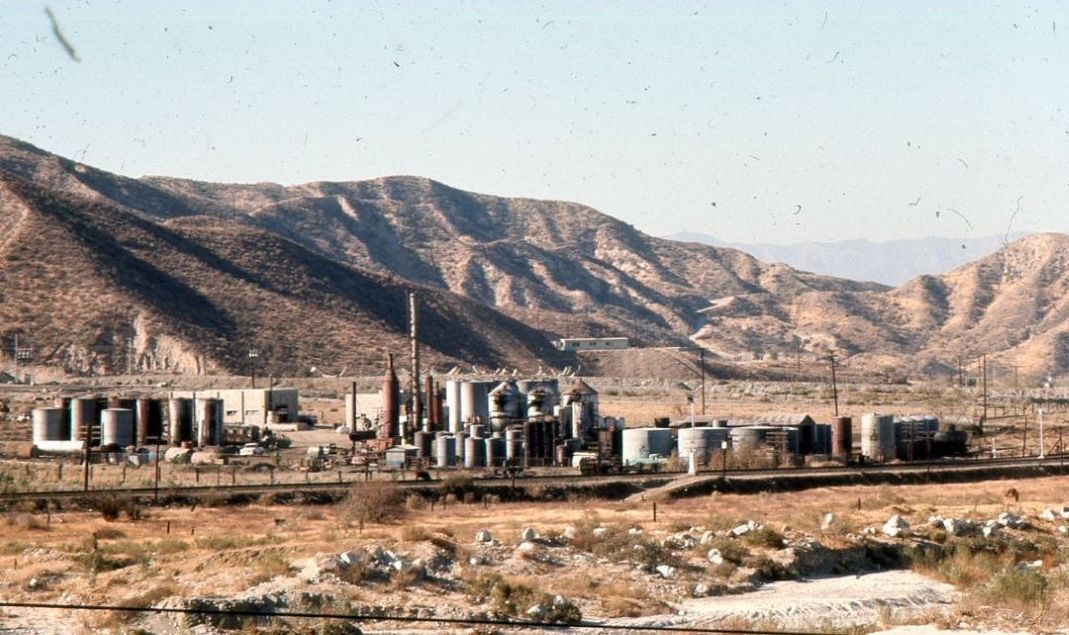
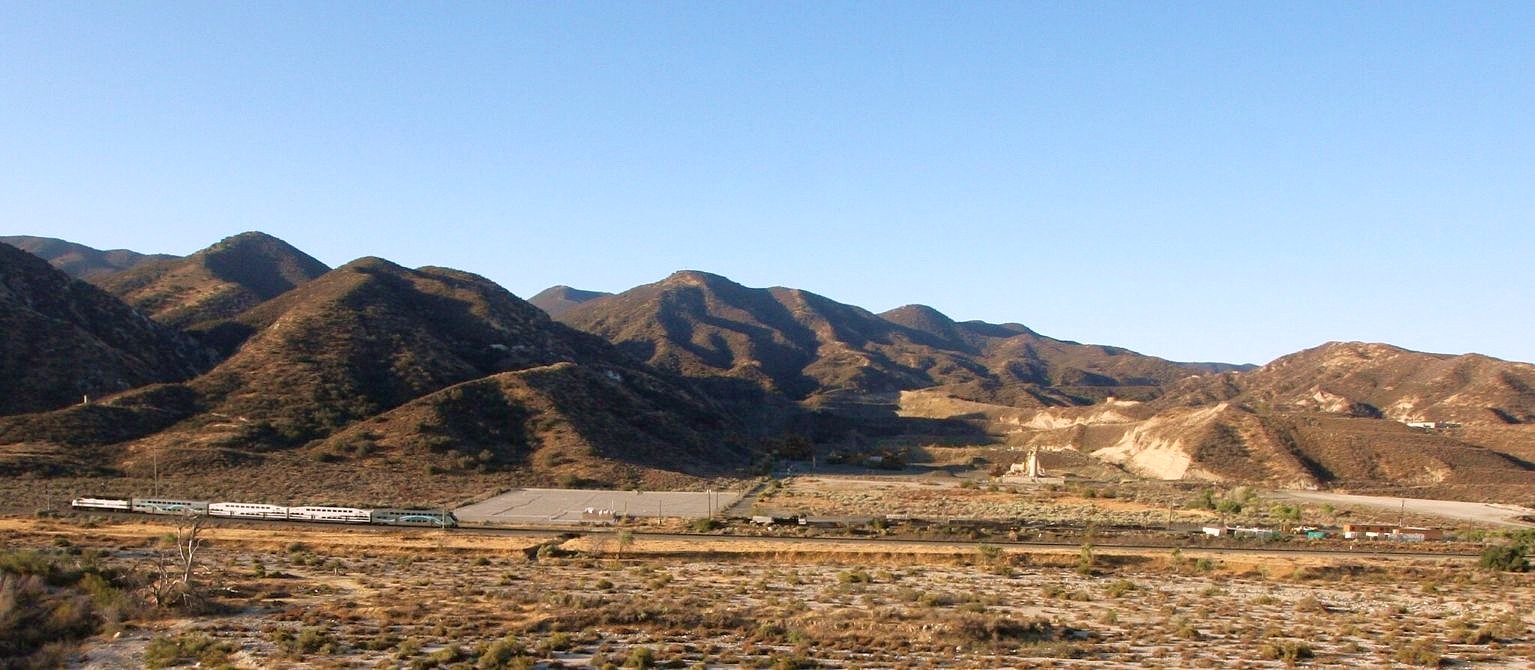
Lang Station Waste Oil Refinery. View towards southeast over the railroad tracks. James Krause photographer. Photo date 1967-1970. (Image from SCVHistory website. Used with permission.)
The Lang Station waste oil refinery was owned and operated by the Lubrication Company of America (LCA). It was located on a 4-acre site in Los Angeles County just outside of the northeast boundary of the City of Santa Clarita just past Canyon Country about 1/4 of a mile northeast from the Lang Station railroad stop (which also doesn't exist anymore) on Lang Station Road. The refinery had no official name. At various times it was called the LCA refinery, the Lang refinery, and the Lang Station refinery. I will use the Lang Station refinery designation because it clearly indicates where it was located - near Lang Station.
Today, Lang Station Road becomes private a short distance after you drive over the railroad tracks just past the Lang Station historical marker (which, by the way, is not at the location of station). Therefore, like the station, the actual refinery site can not be visited. However, there is nothing to see there now except a large, empty lot almost totally capped by asphalt (see aerial photos) due to pollution remediation requirements, which will be explained later.
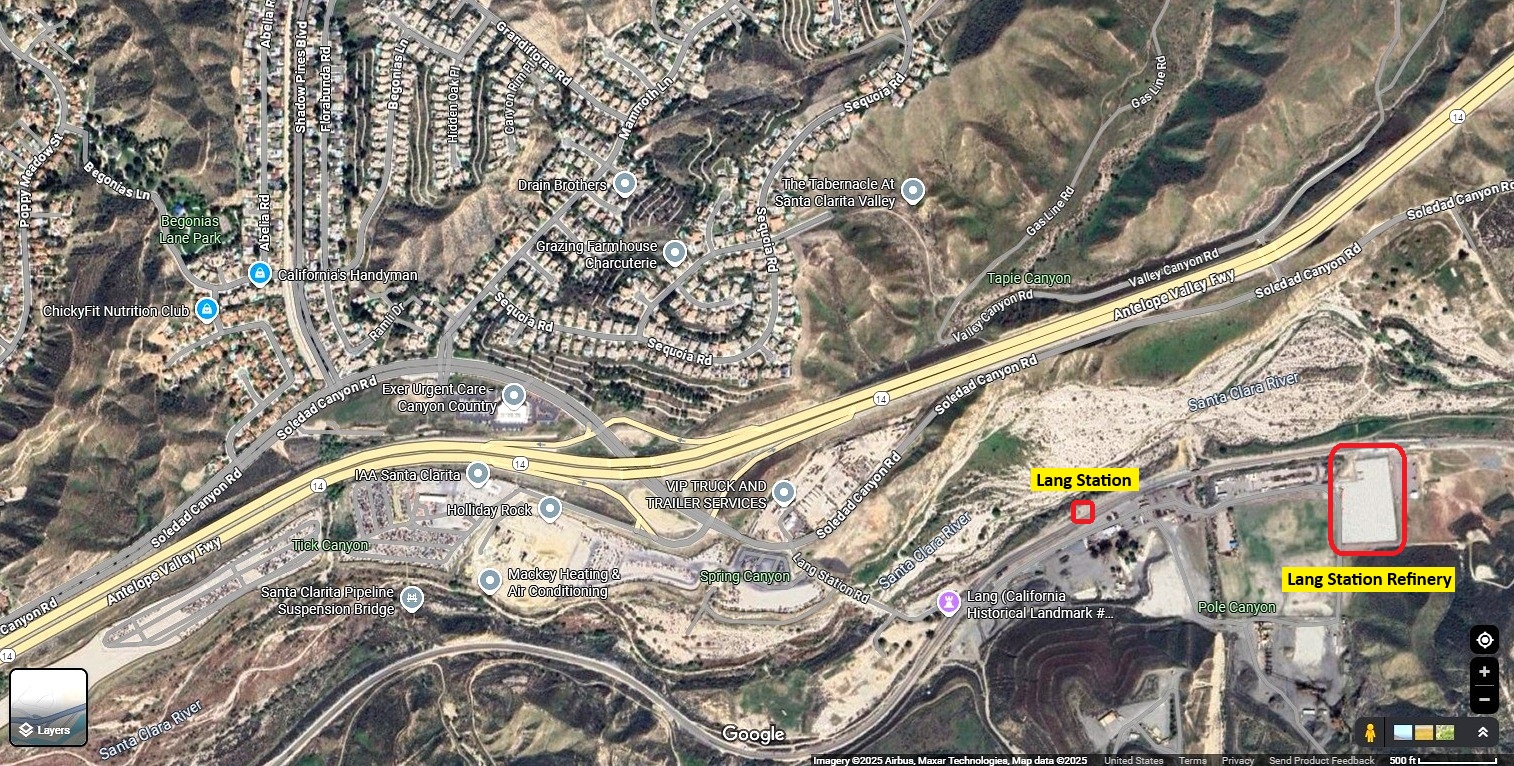
Location of Lang Station refinery using Google Maps. Also shown is the approximate site of Lang Station. At one time, the 1957 Lang California Historical Landmark #590 marker was next to the station, but it was moved probably when the station was demolished in late 1968 or early 1969.
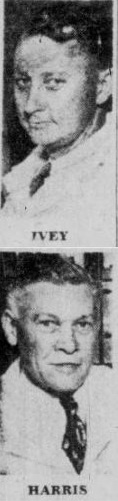
The Lubrication Company of America (LCA) was incorporated in the state of California on April 14, 1946, about 10 years before the refinery was built. There were three directors - Herbert P. Harris, Herbert D. Ivey, Jr., and Robert P. Routt.[1] The actual owner of the company was Herbert Dee (Bud) Ivey, Jr. He was the president and probably provided most of the funds. He would later own the land where the Lang refinery was built.
Bud Ivey was born on September 12, 1918, in Los Angeles, California, and died on May 21, 1982, in Los Angeles. He was the son of Herbert Dee Ivey, Sr. (1885-1966), and Sybil Hope Grant (1888-1985). Ivey, Sr., would become the President and then the Chairman of the Board of Citizens National Bank of Los Angeles and would retire in 1959. After graduating from Stanford University in 1940, Bud received a commission as a 2nd Lieutenant in the Army Air Corps. In 1941, he was sent to study chemical warfare in Maryland. Then in 1942, he was sent to Adjutant General school in Maryland. By August of 1942, he was a Captain.[2] In 1946 he was a Lieutenant Colonel and discharged after serving five years of active duty. Among his service ribbons were the Bronze Star for meritorious achievements. One of his achievements was developing highly specialized lubricants for the U.S. armed forces.[3] Bud also became a California licensed mechanical engineer.
There is no information as to what the company did in its early years. The 1950 U.S. Census for Pasadena, California, listed Herbert Ivey, Jr., as the owner of an oil company, which LCA was. In 1951, LCA's new oil additive product was called "Ivey's Friction Free Oil." The chief chemist of the company, and also a director, was Herbert P. Harris, nationally known for his research to improve lubricity and oil film strength. He had been working on lubrication problems for almost 25 years. Harris was the originator of the new oil additive. It would be ready for distribution by July 1, 1951.[4]
On April 6, 1951, Bud married Mary Lois McLain in Pasadena, California.[5] On April 11, 1954, they had their first child, Grant Waring Ivey.[6] Grant would eventually head LCA after his father died.
In 1956, LCA started constuction of a refinery near the old Lang railroad station. The refinery would be used mainly for recycling waste oil. It would not process crude oil as, for example, the Newhall Refinery or the Pioneer Oil Refinery did. Instead it "received, stored and processed/reclaimed waste oils. Waste oil was transported to LCA by rails and tanker trucks, where it was reclaimed by adding sulfur monochloride and sulfuric acid, to precipitate the metals contained in the waste oils. Cutting oils produced through this process were then skimmed off the top, treated with acid and sold." The "sulfur-cutting oil was produced using diesel, bunker and jet fuels, and hydraulic and engine oils. Byproducts of the recycling processes conducted at LCA facility included lard and pale oils, active and inactive sulfur, sulfur monochloride, and acidic liquids."[7] Cutting oil is used in machining processes to lubricate, dissipate heat, and flush away metal chips. More simply put, they took heavy oil and refined it down to a lighter grade of oil using, among other chemicals, sulfuric acid.[8]
In June of 1957, LCA requested multiple zoning exceptions for expansions to their new oil processing plant. The Regional Planning Commission of the County of Los Angeles approved their plans.[9] Los Angeles County granted LCA an industrial waste permit (#1849) in July of 1957 for an "oil blending operation" on Lang Station Road.[10]. In 1964, LCA again asked for, and was given, a zoning exception to allow them to place three mobile homes on the property for employee housing.[11] By 1969, there were six mobile homes.[12]
Help wanted ads began appearing in 1970. The company wanted "men for petroleum refinery operation." The address was at 12500 Lang Station Road, Saugus.[13] A 1972 help wanted ad requested someone "experienced & semi experienced in oil field and refinery."[14] Also, they were "taking application for men 25 to 45 with or without experience."[15]
In 1974, a small fire at the refinery "started when a vat of cutting oil boiled over." Damage was estimated to be $2000.[16]
The first problem with pollution reported by newspapers occurred in February of 1976. It was claimed anonymously that the LCA was allowing petroleum wastes to flow into the Santa Clara River bed. The Los Angeles County's industrial waste engineering inspector found a small oil spill below the refinery, but it was rather far from the refinery. The company denied spilling any oil. The inspector noted that the spill was just off the road and anyone could have driven up and dumped the oil. The company volunteered to clean up the mess.[17]
In 1978, the company was back requesting a zoning change "to continue the use of four mobile homes for caretakers within an existing oil processing plant site." Evidently, they had either removed two of their initial six mobile homes or they wanted to add four more.[18]
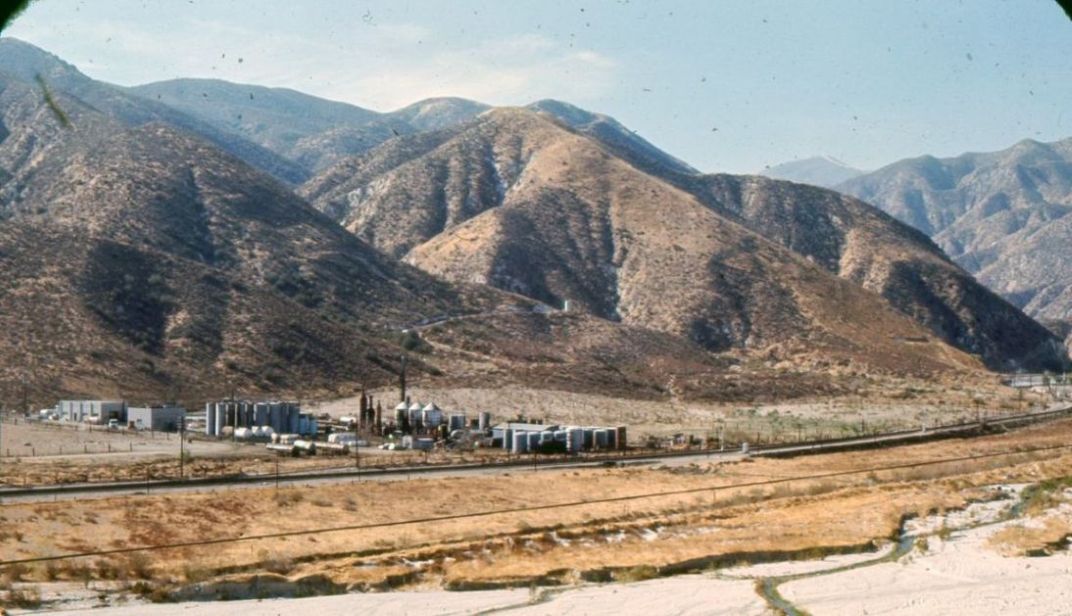
Northeast view of the Lang refinery. James Krause photographer. 1967-1970. (Image from SCVHistory website. Used with permission.)
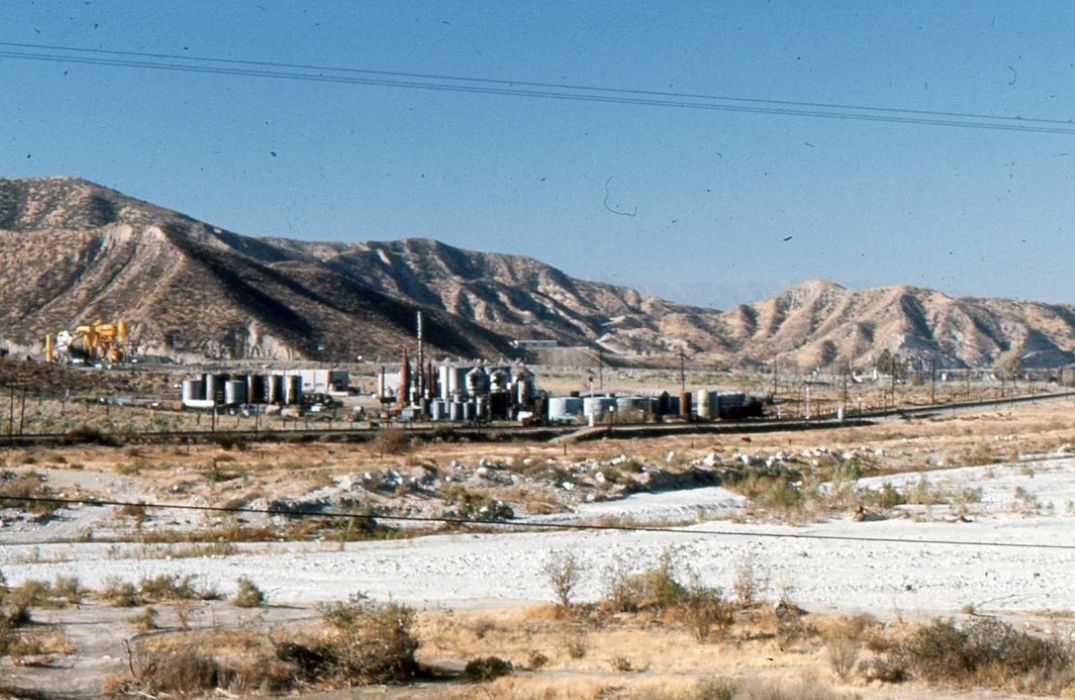
This photo was taken in the same direction, at the same place, and at nearly the same time as the photo at the top of the page. The top photo was zoomed in while this is a normal view. James Krause photographer. 1967-1970 (Image from SCVHistory website. Used with permission.)
In the nearly 25 years of its existence, the refinery was just called an oil processing plant and was ignored by newspapers. It was small, at least during the early years, and located on a rather remote Soledad Canyon site, no newsworthy story there. When pollution became an issue in the 80's, the newspapers, especially the Newhall Signal, suddenly became interested.
On July 2 and July 6 of 1980, Newhall Signal staff writer Rich Varenchik wrote articles exposing the pollution happening at the Lang refinery and what little was being done by the county to stop it.
The July 2 article (read part 1 here and part 2 here) reported that in July of 1979 and 1980, the Los Angeles County Engineer's office had ordered the refinery to clean up their tank bottoms. "Tank bottoms" are defined as petroleum residue left from the refining process. This residue must only be disposed of in properly approved hazardous waste dumps. That was apparently not being done. The owner of LCA, Herbert Ivey, Jr., claimed that there was no pollution. He said that earthen dikes surround the property to prevent anything from flowing into the Santa Clara River bed. However, the GM of the Newhall County Water District, called the refinery a "mess." They had wells used for drinking water downstream from the refinery. Although no trace of harmful chemicals had been found, they were still concerned about what chemicals may come out of the refinery from rain runoff in the future. The question Varenchik asked was why had there been only minimal Los Angeles County official actions against LCA?
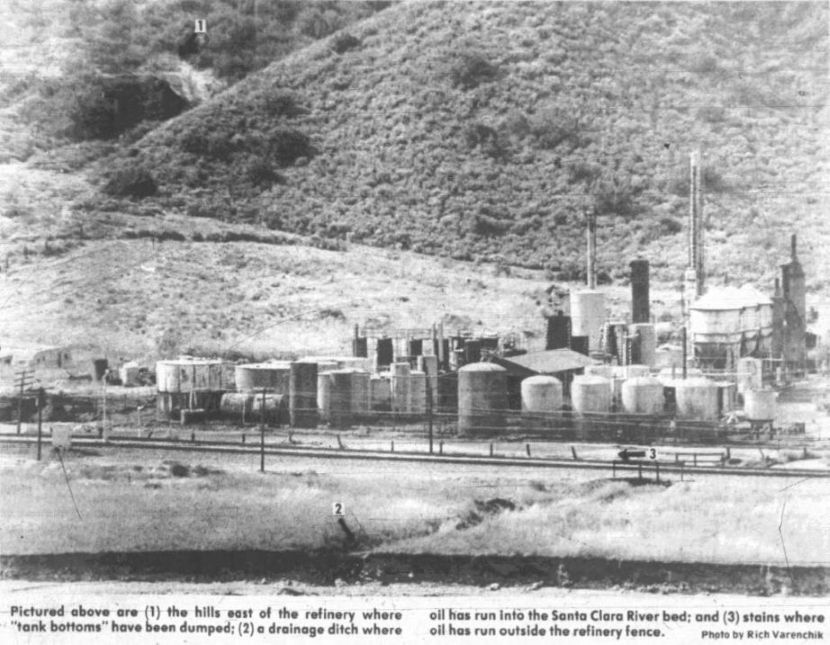
From the Newhall Signal, July 2, 1980.
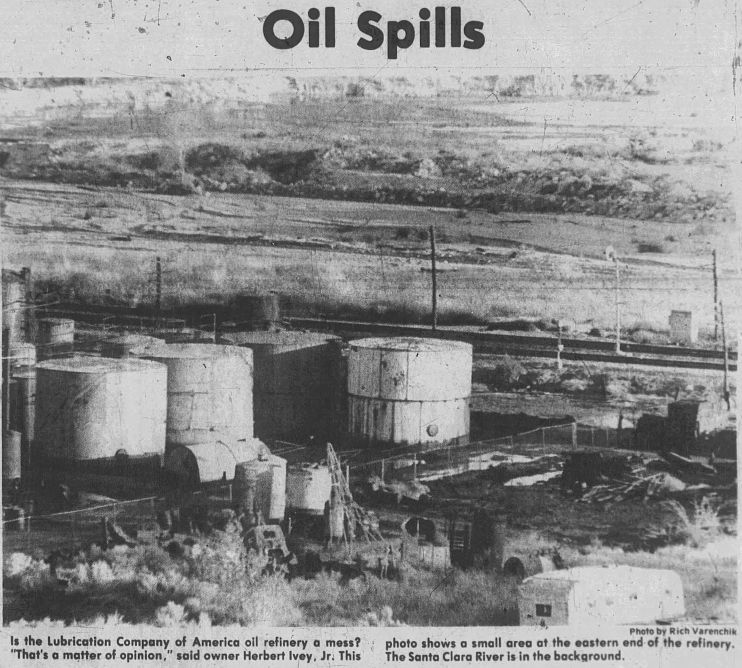
From the Newhall Signal, July 2, 1980.
Varenchik's July 6 follow-up article (read part 1 here and part 2 here) documented a history of the violations by LCA. The first was in 1969 when the county inspector reported that there were numerous violations of their industrial waste permit. Problems were also reported in 1970, 1973, 1976, and 1980. No legal actions were made against LCA. The chief county industrial waste engineering inspector admitted that the company did "not have a reputation for cooperation." Although the county could have suspended or revoked LCA's permit, they didn't. They were afraid of the appeals that would be filed. The inspector complained how they were undermanned and didn't want to put companies out of business. He said that the problems "can't be fixed overnight."
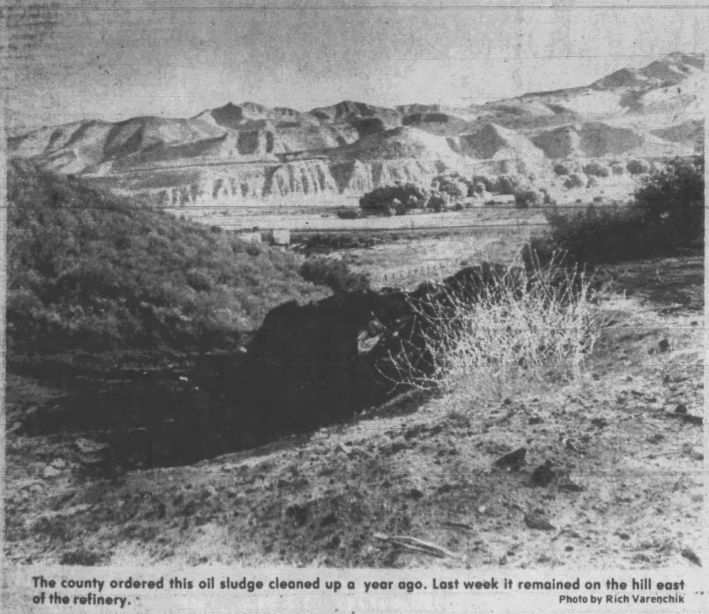
From the Newhall Signal, July 6, 1980.
Varenchik's articles in the Newhall Signal prompted quick action. His next Signal article (read part 1 here and part 2 here) was only three days later. It reported that Los Angeles County Supervisor Baxter Ward's Santa Clarita Valley deputy, Joan Pinchuk, wrote to County Engineer Stephen Koonce and County Planning Director Norman Murdoch pointing out the refinery's problems and asking them what actions they would take to remedy the situation there. Meanwhile, County inspector's told the Signal that LCA had started to cleanup the site. LCA would also get a separate order to clean up the refinery in general. They would also be required to give the county a complete report on "how they are operating, what they are doing, and why they are spilling so much." They also have to "define their work area and tell us how they are going to contain all that mess." Also, the State Department of Fish and Game and the State Water Quality Control Board would be sending out inspectors to see if any liquid from the refinery is getting into the Santa Clara River bed.
On August the 3rd, Varenchik's final Newhall Signal article about the refinery (read part 1 here and part 2 here) was titled "Lang Station Refinery Shapes Up." Refinery owner Herbert Ivey, Jr., said that "We've had inspectors around here that you couldn't believe. The cleanup is coming along." "They (the inspectors from the County Engineer) are keeping on our backs." It turned out that the Santa Clarita Valley had no full-time industrial waste inspector, so inspections were infrequent. Since then, one was assigned and a much more extensive cleanup with many physical improvements to the refinery were now required. Owner Ivey said that "he is proceeding with the cleanup and improvements as fast as he can stating that we are 'not trying to get away with anything. We're not perfect but we try.'"
On May 21, 1982, Herbert Dee Ivey, Jr., died at the age of 63 in his Pasadena home. The cause of death was not reported.[19] His 28 year old son, Grant, became the president of the company.[20]
In 1985, the LCA's Lang refinery was placed on California's Superfund list of hazardous toxic waste sites that needed to be cleaned up. They made the list because seepage from the refinery was still entering the Santa Clara River. Water from the river was being used for private wells and Newhall County Water District public wells. The Lang refinery was 29th on the list of 180 sites. The sites were scheduled to be cleaned up by the state in list order using bond money recently passed by voters. LCA was reportedly not doing anything to clean up the contamination. If the state had to clean it up, they will take legal action against LCA to get reimbursed. The County health department estimated that cleanup costs would be $495,000, but the actual start date would not be for at least one year.[21]
The Los Angeles Times of March 31, 1985, reported that "a history of leaks and spills of petroleum wastes had contaminated as much as half of Lubrication Co.'s 17-acre site. Recent tests have also revealed low levels of toxic polychlorinated biphenyls, or PCBs, and high levels of lead in soil at the refinery." Also from that story:
"Some other sites are on the Superfund list as the result of improper practices that officials knew about for years but took little action to halt. Lubrication Co. of America is one such case. State health department files show that over a period of more than 10 years, state and county industrial waste inspectors uncovered repeated violations at the site on Lang Station Road just off the Antelope Valley Freeway, including intermittent runoff of oily wastes into the bed of the Santa Clara River, which is dry most of the time but feeds rainfall and runoff into ground water supplies."
"In another instance, county inspectors discovered illegal dumping of refinery wastes in a canyon adjoining the property. The company also has been warned about storing oil and acid wastes in leaky drums. But the company was never taken to court to halt such violations. Carl Sjoberg, chief industrial waste engineering inspector for the county Department of Public Works, said Lubricatin Co. has 'piddled away' at cleaning up the site 'just enough to keep us off its back.' Company President Ivey, 30, whose father started the firm, said he believes problems at the site are more cosmetic than threating to the environment. 'Oil has been spilled up there since 1956. On the surface it looks bad,' Ivey said."
"Although the Lubrication Co. site has long been contaminated by leaks and spills, state files suggest that the site has never been extensively sampled for the more exotic pollutants. Last November, however, the toxic substances control division did limited testing, taking 15 samples of soil and sludge, according to records in the division's Los Angeles office. The laboratory results showed PCB levels of up to 16 parts per million in some samples, including a sample of soil near an evaporation pond. In August, the Federal Drug Administration lowered its acceptable tolerance levels of PCBs to 2 parts per million from 5 ppm."
"In a recent interview, Ivey expressed surprise at the discovery of PCBs, saying he heard nothing about it until questioned by a reporter. It 'shocked the hell out of me,' he said. He said that the firm had tried hard to avoid taking PCB-contaminated oil but that in the waste oil business, 'you're going to have that small chance you're going to get some.'"
"State health officials have estimated it will cost nearly $500,000 to clean up the Lubrication Co. site, although the estimate was prepared before the recent testing. Ivey said he thinks he can clean the site for about $400,000 and has applied for help under a new state loan program to help California businesses finance toxic cleanups ordered by the state."
On September 16th, 1985, LCA filed for Chapter 11 bankruptcy (Document 85-00135). Reported were assets of $993,152 and debts of $1,690,481. Their address was 4212 E. Pacific Way, Los Angeles.[22]
Apparently expecting the company to remain in business, the Newhall Signal of September 18, 1985, reported:
"Lubrication Co. holds a long-term option on 47 acres of land adjoining its present 10-acre site near the junction of the Antelope Valley Freeway and Soledad Canyon Road. Lubrication Co. persident Grant Ivey said the company would stick with oil recycling, however. The only expansion now being considered, he said, was the use of solar heaters to evaporate water from liquid waste oil."
In September of 1986, still in bankruptcy, Ivey said that he would like to expand his plant, which was currently "at about one-tenth of one percent of operation" to treat more waste oil.[23]
On March 16, 1987, the California Department of Toxic Substances Control (DTSC) officials told the LCA to clean up the site issuing a Remedial Action Order. The cleanup stalled. Eight months later, DTSC issued a "determination" that the company had not complied with the cleanup order.[24]
In early November of 1989, after almost four years on the Superfund list, the state of California closed down the Lang refinery.[25]
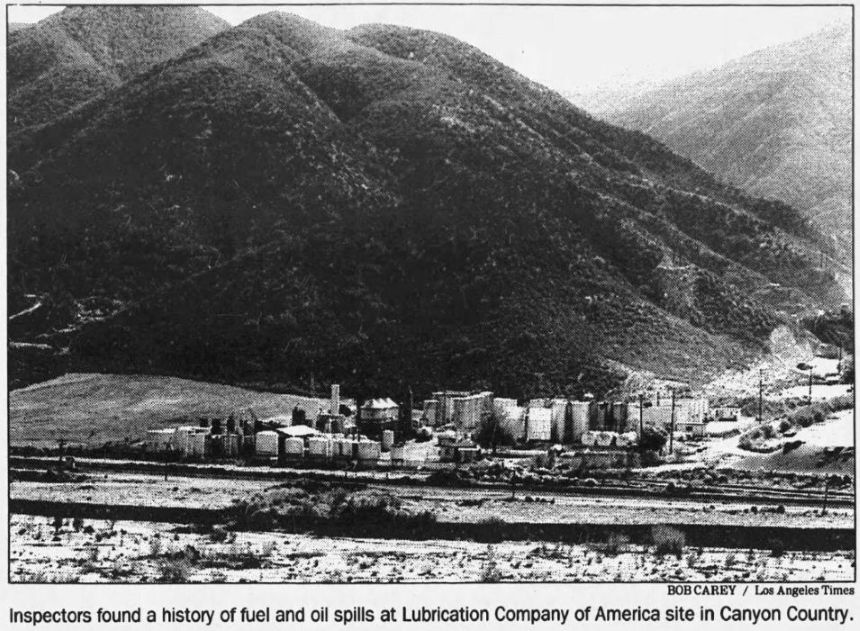
From the Los Angeles Times of November 16, 1989.
On November 16, 1989, both the Los Angeles Times and the Newhall Signal had stories on the refinery. Cleanup was going to start. More testing for soil contamination would be done by the State Department of Health Services. Interestingly, the spokeman for the department was Rich Varenchik, former Signal reporter whose 1980 articles (see above) first exposed the pollution allegedly happening at LCA's Lang refinery. As to be expected, co-owner Grant Ivey, along with his mother and two sisters, were not happy. Cleanup was originally to be funded by a 1984 state bond, but Ivey agreed to sell the refinery property with up to $1.4 million going to the state as a refund for the cleanup.
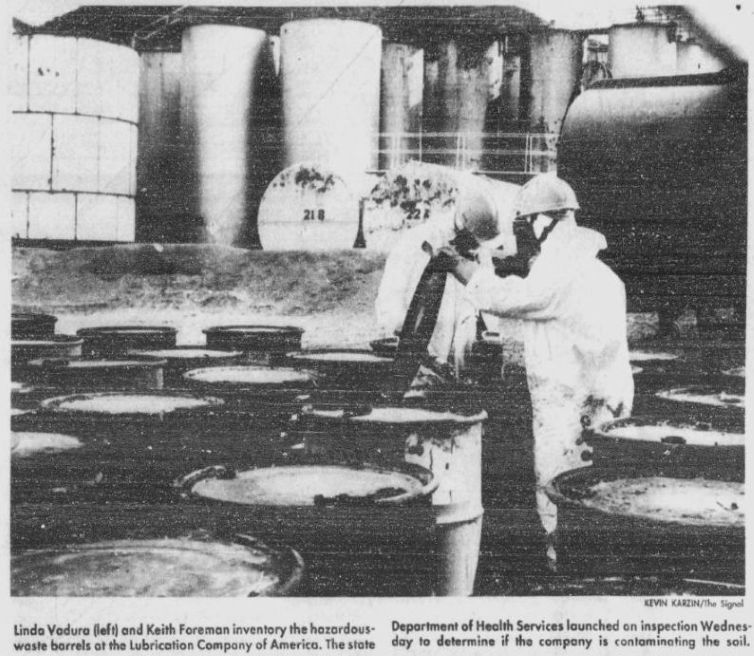
From the Newhall Signal of November 16, 1989.
After four months, the cleanup project had removed 2,000 bags of asbestos insulation and was looking for a legal dumpsite for hundreds of barrels of acid, oil and paint sludge. Soil samples were still being taken, but no water samples had been taken yet.[26] By April 1990, testing was still going on. Ivey, of course, was still angry, but the property was now on sale for $6.7 million. However, potential buyers would not be allowed on most of the land until the cleanup was complete.[27] Ivey would later complain about six holes drilled for samples by contractors hired by the health department that were improperly abandoned and also 50 gallons of acid sludge spilled on the ground due to negligence. Cleanup was scheduled to finish in mid-1991.[28] On October 12 and November 8, 1990, $3,000 worth of LCA heavy equipment was stolen from the closed and fenced off refinery.[29]
In April of 1991, LCA tried to reopen. They requested a permit to recycle waste oil, solvants and coolants at their Lang plant. But in August, the state Department of Toxic Substances Control rejected the company's request. Reasons included LCA's failure to meet state and federal guidelines and non-compliance with the state cleanup order. Also, the company had been convicted of illegally storing, treating and transporting hazardous waste at their other plant in Los Angeles. Ivey complained that state health officials had destroyed $1 million in equipment while "cleaning up" the site. State officials said that the site was a mess and that the equipment was obsolete and had to be demolished. But nothing was said about the status of the cleanup or the money LCA owed for the cleanup.[30]
In a July 9th, 1992, article, the Newhall Signal reported that when the California Environmental Protection Agency (CalEPA), the agency responsible for the cleaning up of the refinery, had started the cleanup, they found "giant leaking drums of acid and sludge, and asbestos scattered throughout the site." [Note - the CalEPA was created in 1991. One of its departments is the Department of Toxic Substances Control (DTSC).] "In different places the soil was literally black, it was so contaminated, and there were puddles of oil." Although most of the toxic substances had been hauled away, the EPA was unsure whether the site posed a risk to public health or the environment. They admitted to not knowing whether or not there was any ground water contaminated because, for some unexplained reason, they had been unable to tap into the water supply directly under the site. They were considering installing a monitoring network to find any contaminants that may have seeped into the ground water. However, the Newhall County Water District has detected trace levels of Trichloroethylene (TCE) in their water supply. TCE was believed to be cancer-causing. The amount detected posed no major problems to the water supply, but they were still concerned about finding even a little TCE in the water. Testing in the Santa Clarita Water Company wells, several miles from the refinery site, had not found any contaminants in its water supply. The EPA was still uncertain about who would pay for the clean-up. They had a signed agreement with the LCA that would entitle the agency to $1.4 million after the company sells the land. However, selling land with such a tainted history would be difficult. The EPA could also go after the companies (estimated to be 87) that sent waste oils to LCA. Under state and federal law, they could be held financially responsible for the site cleanup.
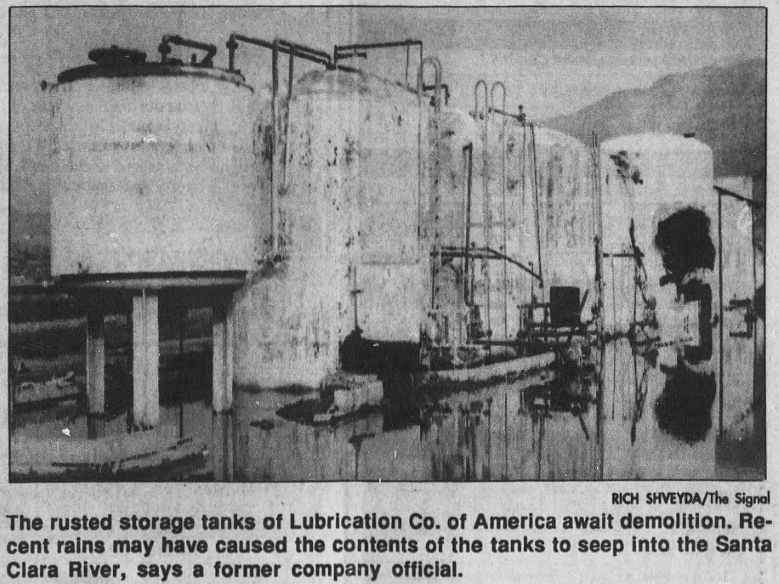
From the Newhall Signal of January 22, 1993.
The Newhall Signal of January 22, 1993, reported that heavy rains were apparently causing contamination at the refinery site. Former LCA president Grant Ivey, who had resigned his position the previous year, was there to pick up some personal property and noticed water rushing through a tank that had once held an oil-cutting additive. The water was flowing into the nearby Santa Clara River. Ivey asked if the tanks were contaminated, why was the EPA allowing rain water to flow into the river? The EPA replied by saying that the tanks were already drained and scrubbed clean. They said that several hundred 55-gallon drums of hazardous liquids and more than 100,000 smaller drums of contaminated soil have been removed. Many were carried out of state and disposed of. Ivey claimed that the state agency has done more harm than good. He said that they spilled more oil at the facility in two years of cleanup than LCA did in the past 30 years. He also said that the EPA has made it impossible for businesses like LCA to survive in California due to the strictest environmental protection laws in the country. Ivey said that the LCA was started to help the environment and that there wasn't many placed to take used oil to be recycled. Most up it ended in a dump. Ivey also stated that his mother owned the land.
On January 31, 1993, the Signal reported that state environmental authorities said that cleanup of the Lang refinery was still the responsibility of it former operator, Grant Ivey. The site was still waiting for a final cleanup. Ivey said that the cleanup was taking way too long and that the property cannot be sold until the state completes its cleanup. He said that it will take years at the rate they're going. Soil samples were still being taken. Companies that are also responsible have hired consultants to figure out what to do. Ivey said that "they'll be tied up in this bureaucratic red tape forever." Ivey also said again that his mother, H.D. Ivey of Pasadena, is the legal owner of the property, and that she has filed for bankruptcy.[31]
Not until 1999 did the Department of Toxic Substances Control (DTSC), finally come up with a remedial action plan for the cleanup of the Lang refinery property. It can be read here (found on the SCVHistory website). DTSC had done a partial cleanup in 1989, but much work needed to be done. They proposed the plan in May during a public meeting. "The proposed cleanup process will entail dismantling onsite structures, removing all above-ground tanks and structures, excavating and disposing of all contaminated offsite soil in spur, covering onsite soil with an asphalt cap, monitoring the groundwater and bioventing." "The site contains potential health hazards by ingestion, inhalation and by skin contact, according to the remedial action plan." There would be a 30-day public comment on the plan.[32]
Incredibly, there was no newspaper stories of the Lang refinery from 1999 to 2016. The 1999 remedial action plan must have been approved. Between 2000 and 2002, all the structures in the refinery area were removed. This was shown by aerial photos (see the aerial photos webpage). On January 11, 2013, a 131 page Draft Five-Year Review was released by USR Corporation, the company contracted by the DTSC to do the cleanup. This lengthy document (has lots of charts) can be read here. It details all the remedial work done up to 2013. For one thing, we learn that the asphalt cap was done in 2003.
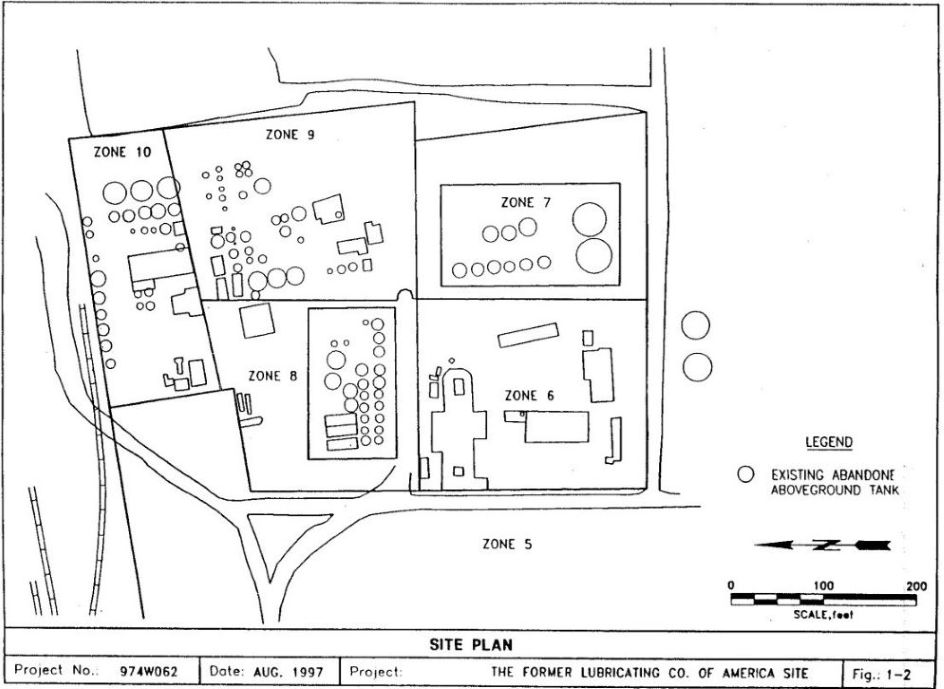
1997 Site plan showing tank locations from Draft Five-Year Review document.
In 2016, the Signal finally reported that a work order was issued on June 24, 2015, by DTSC officials for the final cleanup of the Lang refinery site to USR Corporation (by then part of AECOM Corporation). The work was expected to take one year to complete. Further testing of the soil and groundwater was required. It was also noted in the work order that there was a "concern that some of the nasty chemicals on the property these past three decades might end up in the surface water."[33] The SCV Signal (online edition) of October 26, 2016, reported that the cleanup was "nearing completion." DTSC officials had recently ordered on last sample on the 64-acre site (the actual refinery site was only 4 acres). The work order of last year was not completed. More work had to done.
2017 started with the engineers of USR recommending to DTSC that the cleanup should be extended another six to nine months. The engineers called for "the continued extraction of soil and vapor from the site over the next six to nine months and the removal of residual petroleum hydrocarbons and of concentrations of volatile compounds found in three locations on site."[34]
Just two miles downstream from the former Lang Refinery site, a new 1000-home housing tract was planned - Vista Canyon. The project would also include a water recycling plant. In June of 2017 the Los Angeles Regional Water Quality Control Board issued the necessary permits for the project.[35]
The Santa Clarita Valley (SCV) Signal (online edition) of September 30, 2017, reported that "state officials have called for more cleanup of the contaminated land at Lang Station, a cost to the state of more than $200,000." It had already been more than 12 years since cleanup had begun. The existing contract would be extended to the end of next year (2018). "We have not achieved the cleanup goals we set," according to Javier Hinojosa, contract manager for the DTSC. The addition 18 month extension was specifically addressed to "treat and filter gases known as volatile organic compounds (VOCs) through a process referred to as soil vapor extraction." "VOCs are organic chemicals that have a high vapor pressure at ordinary, room-temperature conditions. Many believe they are carcinogenic."
In December of 2017, DTSC officials "ordered a comprehensive report on the cleanup status on the Lang Station site, which has been re-zoned to allow for home constuction in 2012, after getting a warning about the health implications of building on the contaminated site." The USR cleanup engineers had already told officials earlier in an April report that futher cleanup would be needed if developers removed the asphalt cap now covering the contaminated site. They said that the "site would have to be remediated based on future residential land use." The asphalt cap controls exposure to all site COCs including TPH, VOCs, PAHs, PCBs and metals. The new report is due in April of 2018. The land was re-zoned from M-1.5 (restricted heavy manufacturing) to A-2 (heavy agricultural) as part of the "One Valley One Vision" Santa Clarita Valley Area Plan Update. It was adapted by the Los Angeles County Board of Supervisors on November 27, 2012. That would allow, among other structures, single-family residences.[36]
12500 Lang Station Road, Canyon Country, CA 91387, from loopnet dot com. Property is no longer advertised there (it was 2025 when I found this). Total Lot Size: 61 acres. Zoning: LCA21. Total Land Assessment: $1,407,158. Date on market: 2016.
"Asking Price: $2,100,000. Located in unincorporated LA County next to Santa Clarita, 12500 Lang Station Rd, Canyon Country, is approx. 61 acres and 5 contiguous parcels. This is the former location of LCA - Lubrication Company of America, an oil recycling facility that operated from 1956 to 1989 on two of the five contiguous parcels. The property is vacant. Zoned A-2; includes A-1 uses, Light Ag. LA County Zoning info attached. Title search indicates that there are no recorded easements for any of the property owners using Lang Station Road. This issue will be disclosed and recorded at close of escrow or sooner. The DTSC/EPA began remedial actions circa 1989, removing all structures, tanks and infrastructure and began a Soil Vapor extraction process (SVE) which included a 4 acre asphalt cap on the facility site on Parcels 045 & 046). Remediation appears to be in its final stages (see newly attached DTSC Final Report dated April 2016). A Prospective Purchaser Agreement (PPA) is required between DTSC and buyer describing remediation and/or testing requirements based on the buyer's use after close of escrow on the LCA parcels."
In March of 2018, it was revealed that there was a prospective buyer of the Lang refinery property of 64 acres. The refinery only took up 4 of those acres. Businessman Louis McCutcheon was so interested that he spent about $100,000 for his own environmental testing of the soil and water. His tests were done from February 26-28 and he found the site to be "extremely clean." Asked about whether he planned to build homes there, he said "Absolutely not - no homes, no agriculture."[37]
In September, McCutcheon said that he was just waiting for the DTSC to finish the cleanup. The purchase is expected to close before the end of the year. McCutcheon wanted to turn the property into an outdoor industrial storage facility. That would include rubber-tired heavy equipment, certain types of railroad repair and construction materials, and possible cargo containers. Also mentioned was that the responsible party for the cleanup was still the Lubrication Company of America, who apparently still held title to the property, although in the past Grant Ivey had said that his mother was the property owner.[38]
In the seemingly never ending cleanup of the Lang refinery propery, the DTSC ordered the testing of soil, air, and water over the course of the next year (2019) with the issuing of a work order on November 16, 2018. They claimed that further tests were necessary based on 2018 findings. Cleanup operations in 2018 included removing vegetation and repairing cracks in the asphalt cap put down to shield the contamination.[39]
In July of 2020, a Notice of Proposed Settlement was published for the LCO refinery property between the DTSC and prospective buyer Louis McCutcheon Inc. (LMI). The document, a Prospective Purchaser Agreement (PPA), says that DTSC agrees not to sue or assert claims for environment remediation against LMI. See here to read the Notice as published in the California Regulatory Register. The PPA was signed by both parties in August of 2020.
Notes on funding of the cleanup of State Superfund sites: Usually, the person who contaminated a site is responsible for the costs of remediating the site. However, sometimes that person cannot be identified or cannot afford to pay. In those cases, the site is called an "orphan" site. The remediation of orphan sites are paid for by the California Department of Toxic Substances Control (DTSC) from an account funded by taxes from almost all California businesses. DTSC could also recover some of the costs using legal action against companies that did business with LCA. They did finally settle with some of those companies, but the amounts were probably not very much.
The Lubrication Company of America could not pay for the cleanup. LCA filed for bankruptcy in 1985. The probable owner of the property, Mrs. H.D. Ivey, filed for bankruptcy in 1993. Therefore, the site was declared an "orphan." The Prospective Purchaser Agreement with Louis McCutcheon (LMI) was signed in August of 2020. It would shift some of the costs to LMI because they would have to take over the remediation and long-term stewardship of the site. After the PPA, the site was removed from the state orphan list.
The DTSC website (EnviroStor) lists, on multiple pages (here is one), the remedial cleanup of the Lang site as "Active" as of 2012 and "Inactive." The real current status of the site is unknown. I emailed the DTSC to see if they could provide the latest update, but got no response.
In April of 2024, the California High-Speed Rail Authority published an EIR for the Palmdale to Burbank Project Section.[40] For the Lubrication Company of America site, they reported:
"Case Background: CERCLIS - NFRAP (1000360639) - Site assessed for contamination in 2010 and is listed as NFRAP due to not qualifying for the NPL based on existing information. HIST CORTESE/CORTESE (S101480692) - Facility is listed to be an active State Response site with a status date of 2/14/2012. RESPONSE/ENVIROSTOR (S101480692) - Facility is listed to be an active State Response facility with numerous confirmed COCs (PCBs, PAHs, VOCs, PCE, TCE, TPH, BTEX) to soil, soil vapor, and groundwater used from other uses from prior use as a used oil recycling facility. Cleanup is reported to still be in progress and include prior removal of 358 drums of hazardous waste in 1990, 19 hazardous waste tanks and 55,250 gallons of liquid/sludge and solid hazardous waste in 1992, 150 ASTs, 1,400 tons of solid hazardous waste and 83,000 gallons of liquid hazardous waste in 2002, and removal of numerous other hazardous waste materials to date. Remediation is ongoing at the facility. HIST CalSites (1006494653) - Facility is listed to be an active site in relation to historic usage of the site as a waste oil recycling facility as well as an oil refinery."
They also could not find any recent clean-up updates and concluded that the site was still being remediated.
At this point in time (9/2025), I do not know whether or not McCutcheon actually bought the property, but it looks like he might have based on 2025 aerial photos showing a new business starting up next to the refinery site. If he didn't buy the land, he could have just been tired of waiting for the DTSC to finish the cleanup and backed out. Nobody would blame him for that. I did contact him, but he did not want to provide me with any information. The Los Angeles County Assessor's Office does not recognize the address of 12500 Lang Station Road, the former address of the defunct Lubrication Company of America.
If any new information shows up, I will update this page.
Sources
[1] Articles of Incorportation of the Lubrication Company of America, Copy from the California Secretary of State.
[2] South Pasadena Review, 10/16/1942.
[3] South Pasadena Review, 1/11/1946; Los Angeles Evening Citizen News, 6/20/1951.
[4] Los Angeles Evening Citizen News, 6/20/1951; Los Angeles Times, 6/24/1951; Santa Ana Register, 6/24/1951.
[5] South Pasadena Review, 2/20/1951; Los Angeles Mirror, 6/27/1951.
[6] Los Angeles Times, 4/11/1954.
[7] Draft Remedial Action Plan, Lubrication Company of America, Prepared By: Department of Toxic Substances Control (DTSC), Glendale, California, April 1999.
[8] Newhall Signal, 7/6/1980.
[9] Newhall Signal, 6/13/1957, 9/12/1957; Valley Times, 9/26/1957; Van Nuys News, 10/3/1957.
[10] Newhall Signal, 7/6/1980.
[11] Newhall Signal, 1/30/1964, 3/5/1964.
[12] Newhall Signal, 12/3/1969.
[13] Newhall Signal, 10/5/1970.
[14] Newhall Signal, 7/14/1972.
[15] Newhall Signal, 12/1/1972.
[16] Newhall Signal, 8/9/1974.
[17] Newhall Signal, 2/25/1976.
[18] Newhall Signal, 10/4/1978, 10/18/1978, 10/22/1978.
[19] Los Angeles Times, 5/28/1982.
[20] Los Angeles Times, 3/31/1985.
[21] Newhall Signal, 1/16/1985.
[22] Los Angeles Times, 2/22/1988, 3/7/1988.
[23] Newhall Signal, 9/24/1986.
[24] SCV Signal (online edition), 10/26/2016.
[25] Newhall Signal, 11/16/1989, 1/22/1993.
[26] Newhall Signal, 2/16/1990.
[27] Newhall Signal, 4/20/1990.
[28] Newhall Signal, 5/24/1990.
[29] Newhall Signal, 11/15/1990.
[30] Newhall Signal, 4/15/1991, 4/30/1991, 5/2/1991, 5/17/1991, 8/14/1991.
[31] Newhall Signal, 5/1/1993.
[32] Newhall Signal, 5/20/1999.
[33] SCV Signal (online edition), 11/7/2016.
[34] SCV Signal (online edition), 2/23/2017.
[35] SCV Signal (online edition), 9/20/2017.
[36] SCV Signal (online edition), 12/12/2017.
[37] SCV Signal (online edition), 3/20/2018.
[38] SCV Signal (online edition), 9/21/2018.
[39] SCV Signal (online edition), 1/14/2019.
[40] California High-Speed Rail Authority, Palmdale to Burbank Project Section, Final Environmental Impact Report/Environmental Impact Statement, Appendix 3.10-B: Sites of Potential Environmental Concern, April 2021, pp. 23-24.